Hiển thị các bài đăng có nhãn travel guide. Hiển thị tất cả bài đăng

Thứ Tư, 25 tháng 11, 2015

Natural landscape and reserves in Phu Quoc


The island has a roughly triangular shape with a north-south length of 50km and a west-east width of 25 km.
  • sapa vietnam. Collapse map legend. Map details. Copy map ... Boutique Sapa. 
A great part of the terrain is filled with beautiful sandy beaches, but there is a mountainous region with 99 peaks, among which the Peak of Chua Mountain is the tallest one at 603 meters.

Thứ Hai, 23 tháng 11, 2015

Con Dao: prison and the wonderful natural scenery with the ocean


Con Dao is the biggest archipelago in Ba Ria- Vung Tau province, and is also the most famous one in term of tourism. This archipelago contains 16 islands with the total size of 76 square kilometers, and the largest among them is Con Lon Island.
>>> temple of literature information

Chủ Nhật, 15 tháng 11, 2015

Tranh Stream, Phu Quoc, Vietnam

Tranh Stream is a terrific spot that tourists who once have chance to drop by Duong Dong town, Phu Quoc island district, should not miss out.

Thứ Sáu, 9 tháng 10, 2015

Phu Lang village in Vietnam

Phu Lang has become a brand name like Bat Trang in terms of pottery and ceramics product.

Phu Lang has become a brand name like Bat Trang in terms of pottery and ceramics products. However, thanks to its distance from the urban centre, much of the pristine scenery as well as traditional production have moved forward for centuries without being over-commercialized.

Through times, there are only a few families left who continued their tradition. The yard is packed with firewood and clay. Indoors, there are a large collection of pottery wares, from flower vases to tea pots. Bat Trang is special by its simplicity: from the decorative style to the natural brown color of clay. Villagers are very friendly: they will take you in and give you a quick tour to see how their every activities unfold.

Thứ Năm, 8 tháng 10, 2015

Dai Lai lake Vietnam

Dai Lai Lake is approximately 40km north of Hanoi, towards Noi Bai International Airport direction. The lake belongs to Vinh Yen borough, Vinh Phuc province. It takes approximately 1 hour to get from Hanoi downtown to Dai Lai lake area.

An artificial reservoir turned into a weekend paradise
Hanoi has its excitement and its fearsomeness. Buzzing all around are the narrow noisy streets of the thousand-year old quarter. Crazy as it is, one may still get lost in its glamour. At the same time, as the booze wanes off, one may just find himself longing for a peaceful serenity that seems so impossible to locate in this fast-pace exotic land. Look no further than a mere 25 miles to the north of town! Welcome to the emerald water of Dai Lai lake.


Enjoying its close proximity to the capital, Dai Lai has recently seen a boost in the number of visitors. Motels rise up and offer weekend warriors a spot to enjoy life just a bit, free of all responsibility. Still at its infancy, the services here are nowhere near top of the line, or to be fair, comfortable. The one big plus one has to give is that while government has all the temptation to pollute the lake, it manages to resist. The water is still shining in its glory, swimmable for the most part. So much owes to the truth that a company has recently built an upscale resort on the shore, completed with beach, water sports and water front properties. The Flamingo Dai Lai resort’s services come at a hefty price, and for the most part are reserved for residents and guests with prior reservation only. Its spacious villas, large gardens and the overall luxurious landscape more resemble a European resort town than one of Vietnamese origin.

Outside of the private Flamingo, one can still find many other accommodations on the shore, with most being more affordable than the resort. Good things come at a price, so it should be reasonable that one knows what is expectedly coming his way. Vietnam, after all, is not known for outstanding customer service.
The perfect get-away that does not involve going to the airport
The serenity of the calm water and the refreshingly pure air, thanks to the surrounding mountains and vast forest, as opposed to the choking exhaust of Hanoi’s motorcycles, are the reason more and more people come to its shore with each passing season. Locals often chose to dip in the lake’s water, or go boating around for just one Sunday afternoon. Dai Lai lake may just be harboring the first steps of a boating culture in Vietnam.


On the other hand, visitors who love hiking and climbing mountain can challenge themselves with an adventure across the woods to Nhe Pass or Mo Qua Mountain, both famous for their uprightly high cliffs. The friendly locals are often very willing to lend help if asked for direction. Also, the historical Old Castle of Nguyen Danh Phuong that was established more than 300 years ago during the time of King Le – Lord Trinh chaotic rivalry may prove exciting to history buffs.


For ones that have been in Hanoi for too long and need a break from its initial bustling awesomeness, come no further!

Thứ Tư, 7 tháng 10, 2015

Han Market Danang

The most important trading point of Da Nang City, Han market is popular among local and tourist alike. Located at the grand intersection of Tran Phu Street, Bach Dang Street, Hung Vuong Street and Tran Hung Dao Street, this famous market holds a very important position in the history of the city.

Location
The most important trading point of Da Nang City, Han market is popular among local and tourist alike. Located at the grand intersection of Tran Phu Street, Bach Dang Street, Hung Vuong Street and Tran Hung Dao Street, this famous market holds a very important position in the history of the city.

more: how to travel to dalat Vietnam

Trading activities
Even though in the old days, Han Market was only a modest trading venue for small businessmen, the convenient and ideal location have enabled it to develop into a big trading center near Han River, from which people gave it the name Han Market. The market was officially opened in the 1940s. The French constructed there a big train system called Tourane Marché to transport goods to the main station. As the business grew unceasingly, some Chinese and Vietnamese businessmen decided to build a commercial center around the market with grocery stores, jewelry stores, pharmacy stores, etc. In 1989, the market was fully renovated. Nowadays, as the renovation gives the market a spacious and refreshing atmosphere, the arrangement of stores inside the market also gives the customers a relaxing feeling when shopping there.


 Han market in the 1950s

Interestingly, local inhabitants used to regard the market as “rich market” because it was extremely popular among the more well-off classes of the society. Today that term is absolutely out of place, as everyone enjoys shopping there. A plenty of goods ranging from fresh foods (vegetables, fruits, fishes and meats) to clothes is traded all day long. However, the most special thing to look for at the market is probably fish sauce: the familiar yet unique food of the Central Regions. 
In addition to the variety of choices, Han Market also attracts a lot of people by its relatively low prices because it functions as the center where goods are gathered before being distributed to smaller markets in the province.

more: Official danang tourism Website

Visiting Han market
Han market is ideal for those looking for some Danang's souvenirs before heading home. If you are flying overseas after, you may take limitted dried food with you but if you have more time to spare in Vietnam, stock up on fresh fruits and local snacks. Some specialties that can be found in Han market include: Ly Son garlic, Chili paste, dried rice crackers, dried squids. At the front of the market are fruit stalls, abundant with tropical option from bananas to jackfruits.


Ly Son Garlic - A specialty that can be found at Han market

One can easily reach Han market by taxi or motor taxi. If you stay at one of the beach resort on Danang coast, a trip to Han market would cost $5/one way by taxi.

Thứ Ba, 6 tháng 10, 2015

Travel Guide Cat Ba Vietnam

Most of tourists come to Vietnam want to visit Halong bay and many of those start to find out that Cat Ba islands are one of the best place to discover as it is not as crowded as Halong bay and there are many beautiful sighseeing here also.

After you have spent one day to cruise on Halong bay, visit caves and go swimming then you should choose one or two more nights in Cat Ba island. Here, you can choose to sleep on a private beach bungalow, go kayaking, swimming in clean water, visit hundred year floating village or go rock climbing...There is Lan Ha bay in Cat Ba island that will give you real relax time and unforgetable holiday.


About Cat Ba islands

Cat Ba islands is located in Hai Phong city. It is about 10 km South East of Halong bay. Cat Ba incuded Cat Ba islands and Lan Ha bay where many tourists love to come to trek in to Cat Ba national park or take a cruise to visit Lan Ha bay islets and beaches and floating villages
Cat Ba Islands is in the South of Halong bay world heritage. It consists of 367 islands, off the coast of Hai Phong city and Quang Ninh province, it is far from the center of Hai Phong city about 30 km, from the city of Ha Long about 25 km. Administratively, it is the islands of Cat Hai district, Hai Phong city. It has been recognized as the World Biosphere Reserve.

Cat Ba island, Hai Phong

Cat Ba is the place between the forest and the sea blend , creating a one of a kind landscapes . Come to this beautiful island , visitors are not only bathed in cool blue beaches , but also can discover mysterious nature through primitive forests on the island . Cat Ba National Park is extensive 15,200 ha of tropical forests with system wide 570 ha rich flora and fauna , the species is characteristic white head and Kim Giao trees .

read more: da nang tourism 2015

Cat Ba Island is the giant green carpet contains many mysterious and attractive . Worthy of the Cat Ba Biosphere Reserve 3rd Vietnam , is now recognized as a UNESCO biosphere reserve in the world. The total area of ​​the Cat Ba Biosphere Reserve 26,000 ha wide , with 2 core zone ( strict conservation and human impacts ) , 2 buffer ( allowing economic growth combined with limited but conservation ) and two transition zones ( economic development ) . Zone Cat Ba Biosphere Reserve is the full convergence on the tropical rain forest of limestone islands , mangroves , coral reefs , grass beds and especially the cave system . Cat Ba Cai Beo there remains the Halong culture , the way people have lived here 6475 - 4200 year .

With charm bestowed by nature , biological diversity and the tremendous value of the nation's history , Cat Ba has been and will be an attractive destination for domestic and foreign tourists


Cat Ba island town

Cat Ba is the largest island in the Bay and approximately half of its area is covered by a National Park, which is home to the highly endangered Cat Ba Langur. The island has a wide variety of natural ecosystems, both marine and terrestrial, leading to incredibly high rates of biodiversity. Types of natural habitats found on Cat Ba Archipelago include limestone karsts, tropical limestone forests, coral reefs, mangrove and sea grass beds, lagoons, beaches, caves, and willow swamp forests. Cat Ba Island is one of the only populated islands in Ha Long Bay, with roughly 13,000 inhabitants living in six different communes, and 4,000 more inhabitants living on floating fishing villages off the coast. The large majority of the population can be found in Cat Ba Town which is located at the southern tip of the Island (15 km south of the national park) and is the commercial center on the Island. Since 1997, Cat Ba Town has grown rapidly and has become a tourist hub for both the Island and greater Ha Long Bay.

read more: backpacking vietnam things to do


Gia Luan harbour - Cat Ba island
History of Cat Ba Island

Archeological evidence suggests that people have lived on Cat Ba Island for almost 6,000 years, with the earliest settlements being found on the southeastern tip of the Island close to the area where Ban Beo harbor sits today. In 1938, a group of French archeologists discovered human remains belonging "to the Cai Beo people of the Ha Long culture, which lived between 4,000 and 6,500 years ago… considered to be perhaps the first population group occupying the North-Eastern territorial waters of Vietnam… the Cai Beo people may be an intermediary link between the population strata at the end of the Neolithic Age, some 4,000 years ago". In more recent history, Cat Ba Island was inhabited mostly by Viet-Chinese fisherman and was largely influenced by both the French and American wars. The Island was a strategic look-out point and bombing during the wars often forced local residents to hide among the Island's many caves. Today, the best reminders of the two wars have been turned into tourist attractions. Hospital Cave, which was a secret, bomb-proof hospital during the American War and as a safe house for VC leaders. This three-story feat of engineering was in use until 1975 is only 10 km north of Cat Ba Town. The second attraction, the newly built Cannon Fort, sits on a peak 177 meters high, offering visitors a chance to see old bunkers and helicopter landing stations as well stunning views Cat Ba Island, its coast, and the limestone karsts in Lan Ha Bay offshore.

Cat Ba national park:

At the heart of Cat Ba Island lies a visually stunning and ecologically diverse national park. In 1986, 9,800 [98 km²] hectares (approximately one third of the Island's total land mass) was annexed as Cat Ba National Park, the first decreed protected area in Vietnam to include a marine component (Dawkins 14). It had previously been the site of a timber company. In 2006, the boundaries of the national park were redefined, so the park contained 109 km² of land area and an additional 52 km² of inshore waters and mangrove covered tidal zones (langur website). The park is staffed by 92 people, including over 60 park rangers. In 2004, Cat Ba Archipelago was declared a UNESCO Man and Biosphere Reserve Area in order to protect the multiple terrestrial and aquatic ecosystems as well the diverse plant and animal life that is found on the Island. The UNESCO designation divides the archipelago into three distinct areas, each with certain functions and restrictions that regulates development and conservation measures on the Island.

read more: anthony bourdain vietnam travel guid

Lan Ha bay

Lan Ha Bay has about 400 islets. Going by boat to cruise Lan Ha bay, you will see alot of islets with small beaches. The Bay is home to hundreds of mounts with different form depending on travelers' imagination like Hòn Guốc (Wooden Shoe islet), Hòn Dơi ( Bat grotto), etc.

Many beaches for swiming in clean water

Lan Ha bay has about 139 beautiful, small sandy beaches, many island has sandy beach lie between two stone mountains. Many tourists come to these beaches for swimming, kayaking, having sunbath or have a picnic lunch on the beach. Especially, in some big beaches, local people has invested to build some bungalows where you can come to stay overnight such as Monkey Island Resort, Sandy Beach Resort, Castaway bungalow, Cove Beach bungalow...

Thứ Sáu, 2 tháng 10, 2015

Vietnamese Silk Painting

Silk painting is the traditional vietnam places to visit art of silk painting which originates from painting and drawing on home made rice paper. Today this art has become famous around the world for its simple poetic themes and vibrant colors.Vietnamese artists find the technique to be a unique way to create mystique in their paintings.

The Vietnamese style of silk painting emphasizes softness, elegance and has a flexibility of style. The success of a silk painting very much depends on the quality of the silk. Differently with other kinds of paintings, the silk canvas are usually not painted. The Vietnamese traditional silk painting style tends to use the silk canvas directly as the background of the painting.


Vietnamese Silk Painting1


Vietnamese silk paintings typically showcase the countryside, landscapes, pagodas, historical events or scenes of daily life. The colors are used delicately with the canvas to make ha noi vietnam silk paintings. The delicate white color found in the sky, water, or human portrait, is the color of silk. The color of silk is well known to describe human figure in the paintings of many famous vietnamese artists. Delicate color and silk background give the paintings such an harmony with the nature. Whatever style they follow, silk painters must have an intimate knowledge of the material and fully exploit its shininess and its attractiveness. Painting silk is full of changing and unexpected characteristics, and a wrong stroke of the brush is irreversible.


Vietnamese Silk Painting


Silk represents an important language of Vietnamese painting after lacquer. Its capacity of absorption and dilution given to the works an impression of mellowness spreading through the woofs and wefts of silk, adding a certain vibration to the forms and colours.


Vietnamese silk painting has its own unique character and colours that are distinctly different from those from ancient China and feudal Japan.Each painting is a great description of the beautiful nature and talented skills of the Vietnamese. By using contemporary colours, Vietnamese silk painting has won the hearts of many art lovers nationally and Internationally.

Read more: Tourists should definitely add the temple of literature introduction  to their visiting list in Hanoi

Thứ Ba, 8 tháng 9, 2015

Vietnam travel guide: Things not to miss

viet nam travel guide// Things not to miss
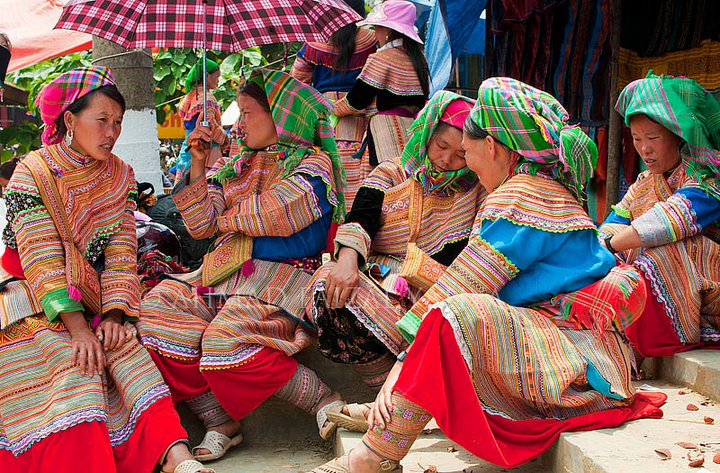
#01 Ethnic Markets

Spectacular traditional dress and a lively atmosphere make the ethnic minority markets a must – especially those in Bac Ha and Can Cau.
#02 Temples and Pagodas

Vietnamese temples and pagodas reflect the country’s diverse range of religions: Long Son Pagoda in Nha Trang is a good example.
#03 Tet

The most important festival in the Vietnamese calendar, Tet sees the New Year ushered in with colourful flower markets, spectacular fireworks and exuberant dragon dances.
#04 Cu Chi tunnels

Look out for the spiked booby traps that Vietnamese guides reveal for visitors to the Cu Chi tunnels.
#05 Bia Hoi

Bia hoi bars are fun, friendly, cheap and a great way to mingle with the locals. Order a bia hoi (lager-like draught) in any of the back lanes in the Old Quarter of hanoi Vietnam.
#06 The Citadel, Hué

The former capital’s historic citadel, mausoleums and gardens are idiosyncratic enough to impress even the most jaded traveller.
#07 Water-puppets

Enjoy a performance of mua roi nuoc, an art form developed in the Red River Delta around Hanoi Vietnam.
#08 Express Silk Tailoring

Visit one of the many Hoi An tailors who can rustle up a made-to-measure silk dress or suit in just a few hours.
#09 Trekking around sa pa 

Trek in the northern mountains around SaPa – a small market town perched on a plateau facing Fan Si Pan, Vietnam’s highest peak.
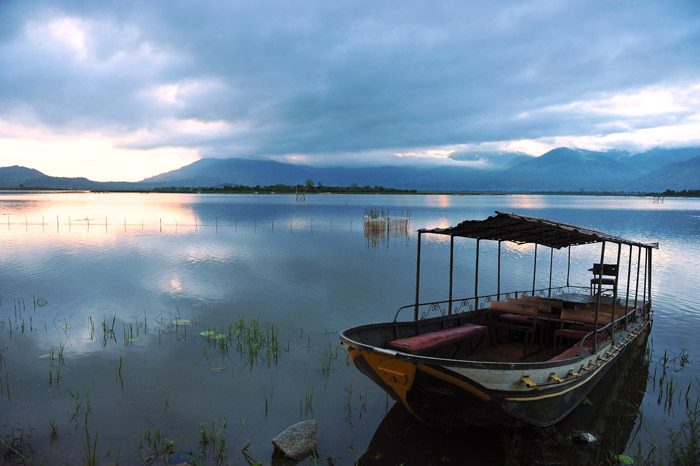
#10 Lak Lake

Paddle the serene waters of Lak Lake in a dug-out canoe, ride on an elephant or take a guided trek into the surrounding forests before a sunset feast overlooking the water.
#11 Hoi An

With its rich cultural heritage, beautifully preserved merchants’ houses and slow pace of life, Hoi An is a captivating place to spend a few days.
#12 The Red River Delta

Slow the pace down with a trip to the countryside and experience a lifestyle little changed in centuries. For more information, see the section on Far North.
#13 The Mekong Delta

Putter through this fertile farming region, surrounded by classic Vietnamese scenery.
#14 Take a Cyclo Ride

The quintessential Vietnamese mode of transport gives you an up-close view of street life. For more information, see the section on local transport.
#15 A boat trip in Ha Long Bay

The thousands of limestone islands jutting out of these silent waters have been dubbed the eighth natural wonder of the world.